On June 27, 2026, Zhengzhou Nissan officially launched the ZNA RICH pure electric pickup, with an official starting price of 143,800 RMB. The new vehicle retains the classic commercial pickup architecture of the RICH series, featuring a body-on-frame (non-unibody) structure. It is equipped with a CATL power battery and an optional dual-motor all-wheel-drive (AWD) system, combining a payload capacity of nearly one ton with the low operating costs of an electric vehicle. Targeted primarily at commercial applications such as engineering operations, urban-rural freight, and small business logistics, it offers global pickup users a highly economical electric alternative to traditional internal combustion engine models.
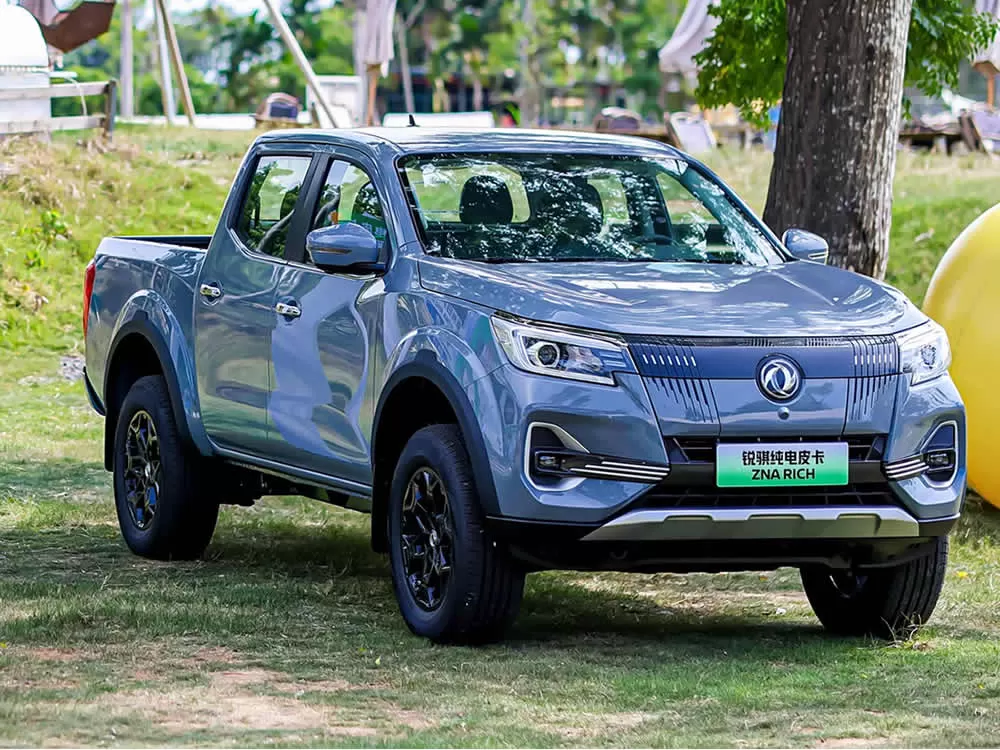
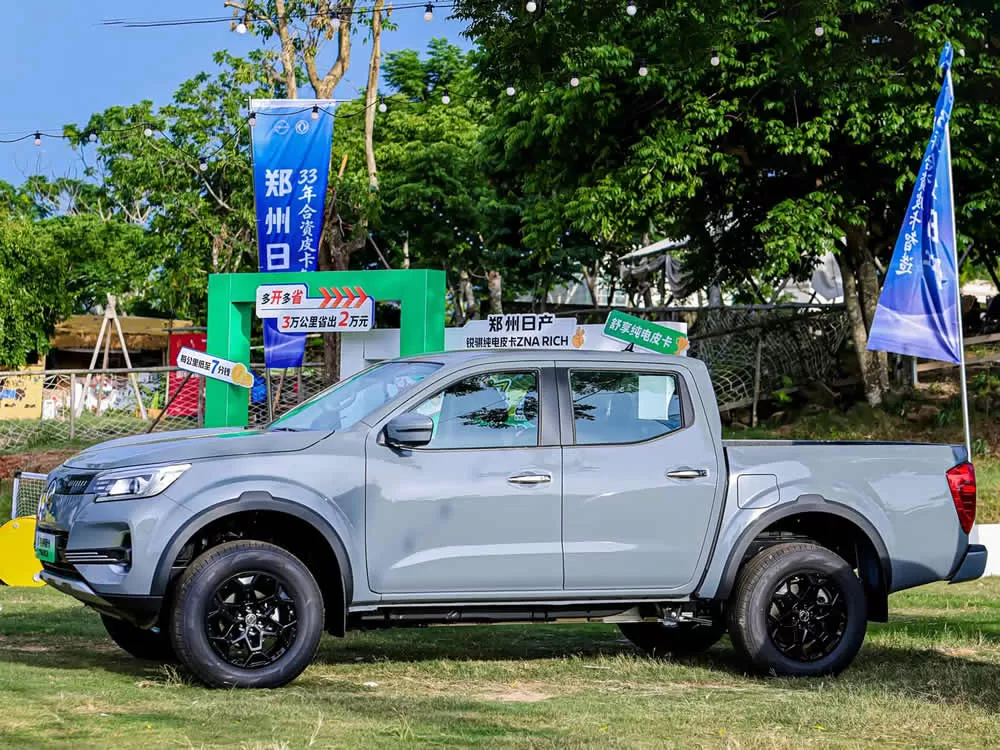
The ZNA RICH pure electric pickup maintains the neat, rugged design style of its internal combustion counterpart. Its body lines prioritize practicality, presenting a stable and durable appearance suited for demanding commercial environments. The vehicle measures 5,287 mm in length, 1,880 mm in width, and 1,860/1,875 mm in height (including roof rails), with a wheelbase of 3,150 mm—dimensions typical of a standard mid-size pickup. The long wheelbase and extended cargo bed ensure ample loading space, accommodating long items and meeting the cargo requirements of most commercial scenarios.
As a pickup designed with commercial utility at its core, the vehicle's chassis and load-carrying capabilities are key strengths. It utilizes Nissan's "Zone Body" architecture featuring a body-on-frame (non-unibody) structure. The high-torsional-rigidity frame is designed to withstand heavy loads and the continuous impacts of complex road conditions; this classic architecture for rugged commercial pickups has been proven durable and reliable through long-term market validation.
Regarding suspension, the rear axle is equipped with progressive leaf springs, tuned to prioritize load-bearing performance. Official data indicates a rated payload capacity of up to 995 kg—approaching the one-ton mark. Whether for transporting construction materials, moving tools and equipment, or daily goods delivery, the vehicle meets heavy-duty requirements and adapts to diverse commercial applications.
The new vehicle offers both two-wheel drive (2WD) and four-wheel drive (4WD) versions to meet the diverse power and operational needs of different users.
The 4WD version features an electric all-wheel-drive system powered by dual front and rear motors, delivering a combined system output of 360 kW and a peak torque of 729 N·m. Thanks to the inherent characteristics of electric powertrains—specifically high torque at low speeds—the vehicle delivers immediate, robust power when starting under heavy loads, climbing hills, or navigating unpaved terrain. Compared to traditional internal combustion engine (ICE) pickups, it offers faster power response and smoother power delivery.
Regarding the battery and range, the entire lineup comes standard with a CATL power battery boasting a capacity of 77.28 kWh. Under the CLTC cycle, the 2WD version offers a range of 451 km, while the 4WD version offers 430 km—sufficient to cover typical daily inter-city transport and regional operations while minimizing the need for mid-trip recharging. To address durability concerns associated with long-term commercial use, the manufacturer offers a lifetime battery warranty for the original non-commercial owner, significantly reducing long-term ownership risks.
The cabin design prioritizes practicality and ease of use, featuring a multi-function information display and a 10-inch multimedia infotainment system that supports essential functions such as audio-visual entertainment and a reversing camera. Standard features also include cruise control and keyless entry, which help reduce driver fatigue during medium-to-long-distance transport and enhance daily convenience, ensuring a comfortable passenger experience alongside the vehicle's commercial utility.
The pure electric powertrain offers significant cost advantages for a commercial pickup. Official estimates indicate an operating cost as low as 0.07 RMB per kilometer; based on an annual mileage of 30,000 km, this results in fuel-related savings of approximately 20,000 RMB compared to a similarly classed ICE pickup. Additionally, the electric model eliminates the need for urea (AdBlue) and requires fewer maintenance procedures, resulting in daily upkeep costs that are far lower than those of ICE pickups and delivering outstanding operational advantages over the vehicle's entire lifecycle. In terms of policy, new energy pickup trucks benefit from incentives such as a 50% reduction in purchase tax and exemptions or reductions in vehicle and vessel taxes, thereby lowering both acquisition and operating costs. In the domestic market, they also enjoy advantages like preferential road access rights and toll-free highway travel for "green channel" logistics, which boost operational efficiency and profitability.
As a core product in Zhengzhou Nissan’s strategy for the pure electric commercial pickup segment, the ZNA RICH EV pickup inherits the reliability and durability for which Nissan pickups are renowned, while leveraging electrification to deliver a competitive edge in operating costs. It retains key commercial pickup attributes—such as a body-on-frame structure and high load-bearing capacity—while utilizing pure electric power to ensure lower running costs and a smoother driving experience.
For individual business owners, construction firms, and urban logistics operators worldwide, the RICH EV pickup offers a solution that balances durability, load capacity, and cost-efficiency, serving as a highly cost-effective option for the electrification of the traditional internal combustion engine pickup market.