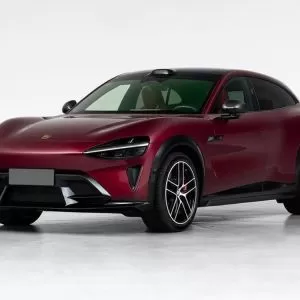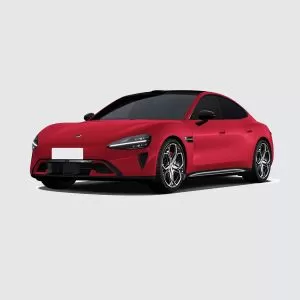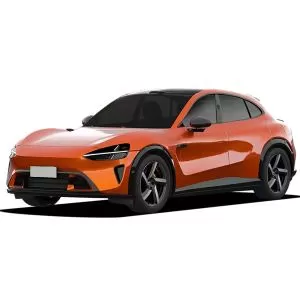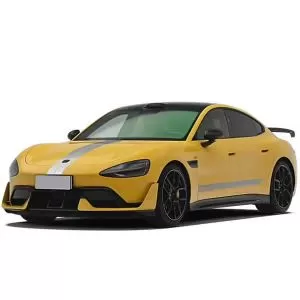
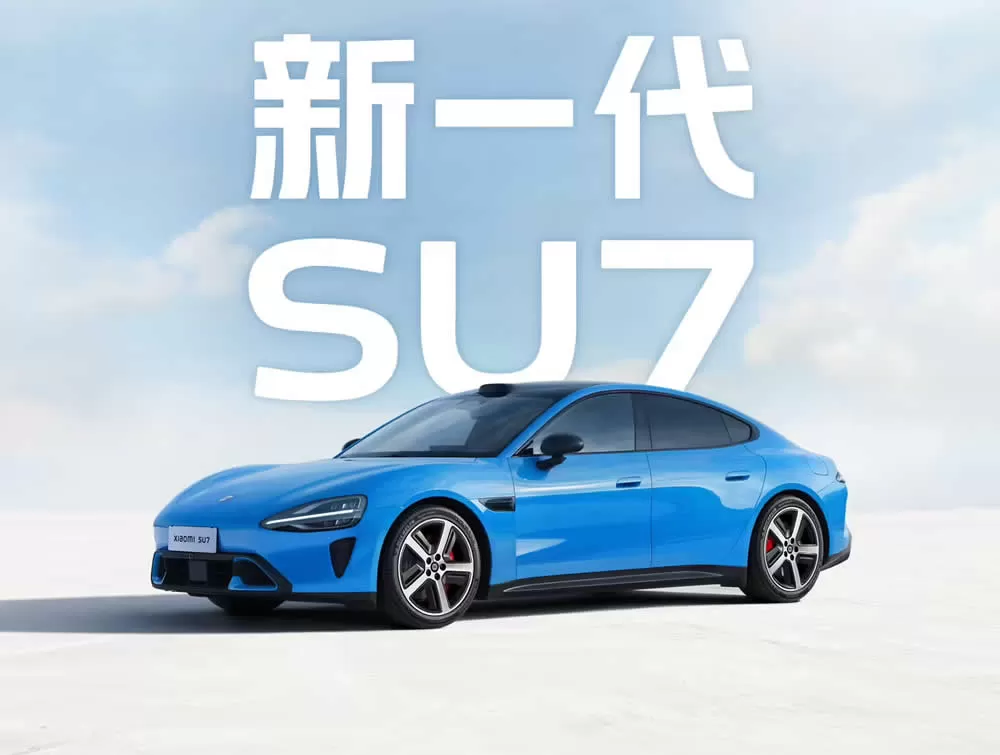
Xiaomi Auto officially announced on January 7, 2026, that the new generation SU7 will be launched in April 2026, with pre-orders opening simultaneously. The new car continues its positioning as a "luxury high-performance pure electric sedan," and introduces a new color – Capri Blue. The exterior is stable and elegant, with a significant improvement in quality. This redesign is not just a minor update, but a comprehensive leap forward in terms of the three core systems (battery, motor, and control), intelligent driving, and comfort features, making it a milestone in "technological accessibility" for pure electric sedans in the 200,000 RMB price range.
|
Upgrade Area |
Redesign Highlights |
Compared to the current model (2024 model) |
|
High-voltage platform |
The entire series has been upgraded toa 900V high-voltage architecture, supporting 5C super-fast charging. |
The current model uses a 400V platform, resulting in charging efficiency that is more than 30% lower. |
|
Charging performance |
Charging from 10% to 80% takes only11.3 minutes, providing a range of 525km. |
It used to take about 20 minutes and provide a range of about 350km. |
|
Battery system |
Equipped withCATL's Kirin II battery, with an energy density of 189Wh/kg |
Originally 152Wh/kg, the range has been significantly improved. |
|
driving range |
The standard CLTC has a rangeof ≥800km, and the Pro version has a rangeof ≥850km. |
Originally up to 830km (Pro version), actual range is more stable. |
|
Motor performance |
The new TZ220XY102 motor has its rated power increased to299 horsepower . |
The original 220kW (approximately 299 horsepower) remains unchanged, but efficiency has been optimized. |
|
Intelligent driving |
All models come standard with LiDAR and NVIDIA Thor-U chip, supporting "parking space to parking space" NOA (Noise, Arrival, and Alarm) communication. |
Originally, only the Max version had the LiDAR as an optional feature; the standard version was a pure vision-based solution. |
|
Chassis System |
Closed dual-chamber air suspension + CDC electromagnetic damping, supports 5-level height adjustment |
Originally only available on the Ultra version, and with only 4 adjustable settings. |
|
Comfort features |
All models come standardwith ventilated/heated/massaging seats, and the front seats are upgraded with a zero-gravity mode. |
Originally only available on higher-spec models, massage function was an optional extra. |
|
Cockpit Interaction |
The second-generation smart cockpit chip boasts a 50% increase in computing power; it comes standard witha 10-inch W-HUD head-up displayand supports AR navigation. |
Originally, there was no HUD, only central control screen interaction. |
|
New features |
In-car fragrance system(3 scents available),magnetic charging port(supports external device power supply),power-closing trunk. |
This configuration is not available. |
|
Door handles and structure |
The concealed door handle featuresa mechanical emergency opening mechanismto address the issue of malfunction in low temperatures. |
Originally a purely electronic structure, it is prone to failure at low temperatures. |
Exterior: Retains the classic fastback design, with minor adjustments to the headlights and a 10% improvement in cooling efficiency; the wheel design is refreshed, and the Capri Blue paint finish features a metallic sheen within the deep blue, creating a richer visual layering.
Interior: The door panels and instrument panel trim have been upgraded from faux suede to high-grade leather materials, which are delicate to the touch and easy to clean; the driver's seat is thicker and softer, the rear seat cushion is lengthened by 2cm, and the front upward angle is optimized, effectively alleviating leg pressure caused by the high floor of electric vehicles.
Quietness: The entire vehicle uses multi-layer soundproof glass, reducing wind noise by 3 decibels, and combined with air suspension, provides a quieter high-speed cruising experience.
Human-Machine Interaction: The W-HUD projection information is clear and stable, with automatic brightness adjustment; the fragrance system is linked to the air conditioning, and three fragrances—"Forest," "Citrus," and "Cedar"—can be switched via voice command, providing a fully immersive experience.
|
Model |
Starting price (estimated) |
LiDAR |
High-voltage platform |
Seat massage |
air suspension |
Intelligent driving capability |
|
Xiaomi SU7 facelift |
235,900 yuan |
✅ Standard features across the entire series |
✅ 900V |
✅ Standard features across the entire series |
✅ Standard features across the entire series |
✅ Full-scenario NOA |
|
BYD Han L EV |
229,800 yuan |
✅ Standard features across the entire series |
❌ 400V |
✅ High-end configuration as standard |
❌ Leaf springs |
✅ L2+, no end-to-end connection |
|
Tesla Model 3 |
235,900 yuan |
❌ None |
✅ 400V |
❌ None |
❌ None |
✅ FSD (optional) |
Conclusion: The Xiaomi SU7 redesign, with its high-end hardware as standard across all models, breaks the industry's unwritten rule of "high-end features only for high-end models." At the same price point, it is the first to achieve the combination of lidar, 900V platform, air suspension, and massage seats across all models, offering a significant cost-performance advantage.
Despite the comprehensive upgrades, the expected price increase of approximately 20,000 RMB has sparked discussions among some users regarding the "cost-effectiveness" aspect. Furthermore, the long-term durability of the second-generation Kirin battery, the system stability of the Thor chip, and the coverage rate of urban NOA (Navigate on Autopilot) still need to be verified by the market.
However, it is undeniable that the updated Xiaomi SU7 has evolved from a "cost-effective option" to a "technology definer," aiming not only to win sales but also to reshape the configuration standards of pure electric sedans in the 200,000 RMB price range.