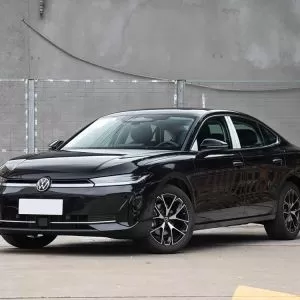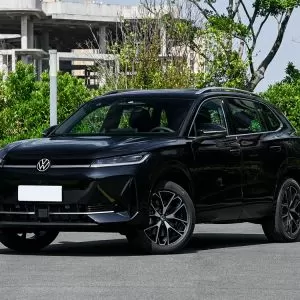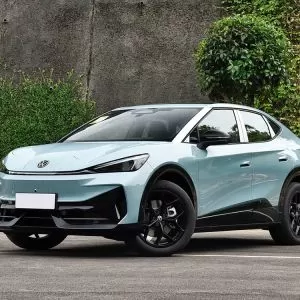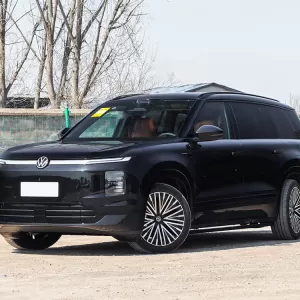
On December 15, 2025, Volkswagen officially announced detailed configuration information for its new all-electric model, the ID. Polo. This small car, built on the MEB+ dedicated electric architecture, boasts a maximum WLTP range of 450km and supports 130kW DC fast charging, making it a new choice for urban electric travel. The ID. Polo is scheduled to launch in the spring of 2026, becoming the first of four entry-level all-electric models.

The ID. Polo continues the design language of the Volkswagen ID family, featuring a closed grille design at the front, equipped with a continuous LED light strip and an illuminated brand logo, resulting in a simple and stylish overall look. The vehicle dimensions are 4053mm in length, 1816mm in width, and 1530mm in height, with a wheelbase of 2600mm, offering significantly improved space performance compared to the gasoline-powered Polo.
Thanks to its pure electric architecture, the ID.Polo boasts 19mm more longitudinal space, resulting in a more spacious and comfortable rear passenger experience. Storage capacity is equally impressive, with the trunk volume increased to 435L, expanding to 1243L with the rear seats folded down, far exceeding the 351L of the gasoline-powered Polo and placing it at the forefront of its class of electric vehicles.

The ID.Polo will offer three powertrain options:
Entry-level: Equipped with a 37kWh lithium iron phosphate battery, offering two power outputs: 85kW (approximately 116 hp) and 99kW (approximately 135 hp). DC fast charging reaches 90kW, and the range is designed specifically for urban commuting.
High-end: Equipped with a 52kWh ternary lithium battery, with a maximum power output of 155kW (approximately 211 hp), a WLTP range of up to 450km, and support for 130kW DC fast charging, capable of charging from 10% to 80% in 20 minutes. The high-performance ID.Polo GTI also uses a 52kWh ternary lithium battery, but its maximum power is increased to 166kW (approximately 226 horsepower). Its 0-100km/h acceleration is expected to be around 5.6 seconds, with a slightly shorter range than the regular high-end version. It emphasizes a sporty driving experience and is expected to officially launch at the end of 2026.
The ID.Polo utilizes PowerCo's unified battery cell format and cell-to-pack (module-less battery pack) technology, eliminating additional battery housing modules and cooling plates. This not only reduces vehicle weight and space occupation but also increases battery energy density by 10%.
Built on the MEB+ platform, the ID.Polo also features significant upgrades in intelligent features:
Equipped with a 12.9-inch central infotainment screen with a new menu structure.
Below is an independent air conditioning control panel with illuminated buttons.
A practical small dial is located in the center console for volume adjustment.
Supports wireless charging for mobile phones.
Features the new generation Travel Assist driver assistance system.
Becomes the first Volkswagen model to support traffic light and stop sign recognition.
The ID.Polo precisely targets the urban small pure electric vehicle market (the B-segment hatchback segment). In Europe, its direct competitor is the Renault 5, but it boasts a size advantage. The ID.Polo is approximately 13cm longer and has a 6cm longer wheelbase than the Renault 5, offering superior interior space.
In the European market, the ID.Polo's starting price is expected to be €25,000 (approximately RMB 185,000). It will also be launched in the Chinese market in the future, but the specific price has not yet been announced.
As the electrified continuation of the Polo series, the Volkswagen ID.Polo not only inherits the classic design elements of the gasoline-powered Polo but also achieves comprehensive upgrades in terms of space, range, and intelligent features. Its WLTP range of 450km meets the needs of daily commuting and short-to-medium distance travel, while its 130kW fast-charging capability greatly alleviates users' range anxiety. With the launch of the ID.Polo, Volkswagen's competitiveness in the small pure electric vehicle market will be further enhanced.