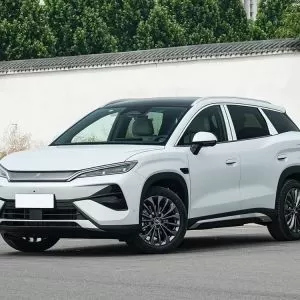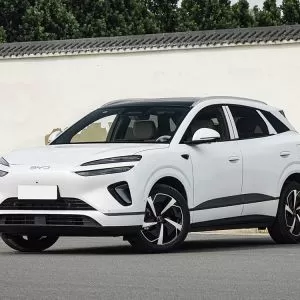
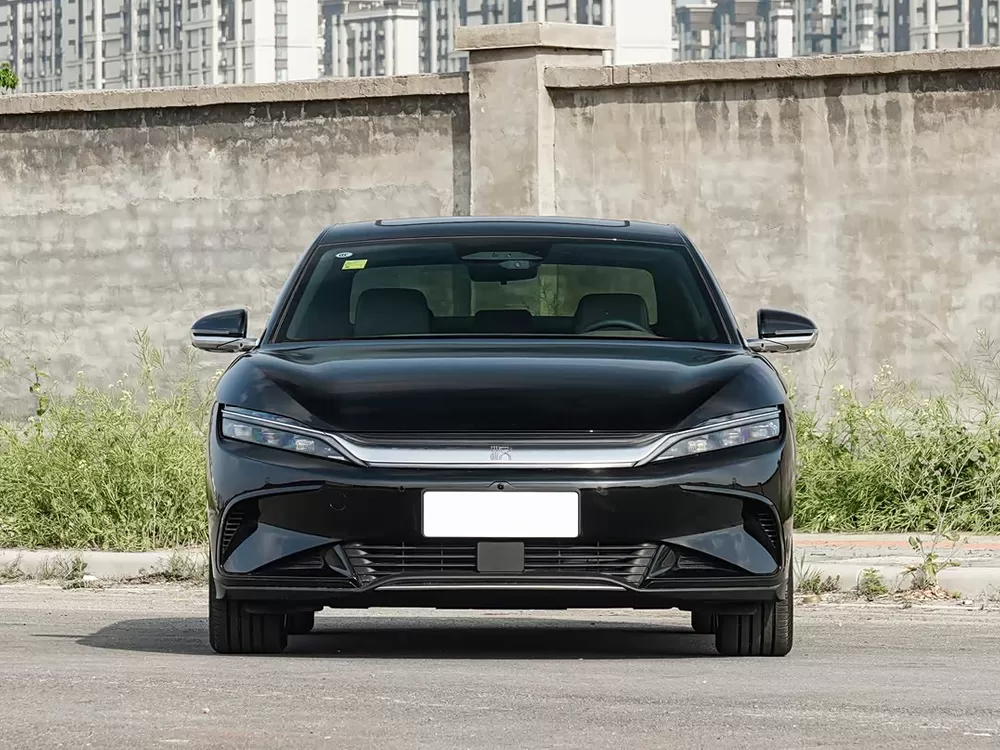
On April 22, 2026, BYD officially unveiled the 2026 Han EV Flash Charge Edition—a mid-to-large-sized all-electric sedan that, starting at a price of ¥179,900, comes standard across the entire lineup with a 705km driving range, 9-minute flash charging capability, an energy consumption rate of 10.8 kWh/100km, the second-generation Blade Battery, and the "Eye of the Gods 5.0" Intelligent Driving System. Through the use of a smaller battery, a lighter body, and higher efficiency, it demonstrates that the ultimate solution to range anxiety is not a larger fuel tank, but rather faster refueling speeds combined with lower fuel consumption.
|
parameter |
2026 Han EV Flash Charge Edition |
2025 Han EV Smart Driving Edition |
Industry comparison ( Tesla Model 3 rear-wheel drive) |
|
Battery capacity |
69.07 kWh |
79.6kWh |
60kWh |
|
CLTC battery life |
705km |
701km |
556km |
|
Energy consumption per 100 kilometers |
10.8kWh |
12.18kWh |
12.4kWh |
|
Curb weight |
1940kg |
2040kg |
1611kg |
|
Drive type |
Rear- mounted single motor |
Rear-mounted single motor |
Rear-mounted single motor |
|
Maximum power of the motor |
240kW |
200kW |
202kW |
|
Vehicle dimensions |
4995×1910×1495mm |
4995×1910×1495mm |
4694×1850×1443mm |
|
wheelbase |
2920mm |
2920mm |
2875mm |
|
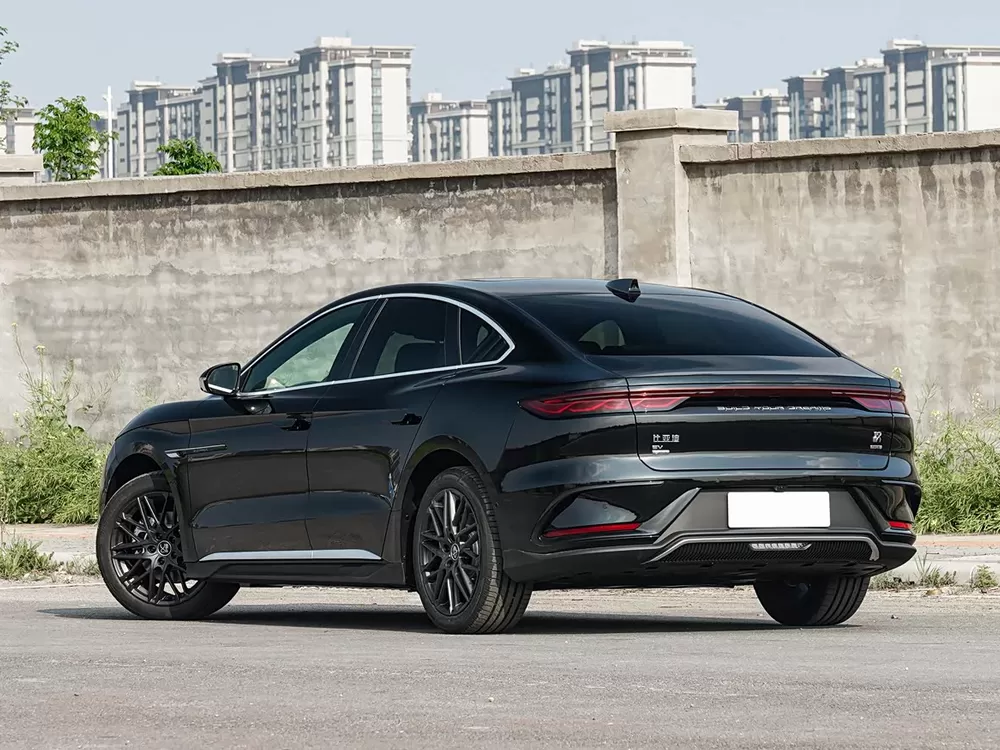
drag coefficient |
0.208Cd |
0.233Cd |
0.22Cd |
Technological Breakthroughs:
Second-Generation Blade Battery: Employs a composite system featuring Lithium Manganese Iron Phosphate (LMFP) combined with a Silicon-Carbon Anode; the voltage platform has been raised from 3.2V to 3.8V, resulting in a 5% increase in system energy density and a 20% reduction in internal resistance.
8-in-1 Silicon Carbide (SiC) Electric Drive System: Integrates eight major components—including the motor, electronic control unit, and reducer—achieving a system efficiency of 99.2% and a 70% reduction in switching losses.
iBCS Intelligent Battery Management System: Restricts daily usage to the 0–85% charge window, thereby avoiding inefficient operating zones and extending battery lifespan.
Vehicle Lightweighting: Extensive use of aluminum alloy in the chassis and optimization of the body structure have resulted in a weight reduction of 100kg, directly lowering energy consumption and reducing inertial mass.
Charging Speed:
10% → 70%: 5 minutes (replenishing approximately 350 km of range)
10% → 97%: 9 minutes (at ambient temperature)
-30°C Low-Temperature Environment: Charging time increases by only 3 minutes compared to ambient temperatures, with no performance degradation.
Charging Protocols: Supports an 800V high-voltage platform; compatible with the international standard ISO 15118-20, enabling compatibility with mainstream global ultra-fast charging stations.
Technical Principles:
Achieves high-efficiency power conversion through the use of Silicon Carbide (SiC) power modules.
Employs a multi-channel thermal management structure within the battery pack to ensure that temperature rise remains controllable under high-current charging conditions.
Requires charging stations capable of delivering an output power of ≥300 kW.
Global Significance: This is the world's first mass-produced vehicle—specifically a sedan in the 200,000-yuan price segment—to achieve "full charge in 9 minutes" capability. Its charging efficiency surpasses that of most vehicles in the 300,000+ price range utilizing 400V platforms, marking a milestone in which Chinese brands have secured a leading role in establishing standards for energy replenishment technologies.
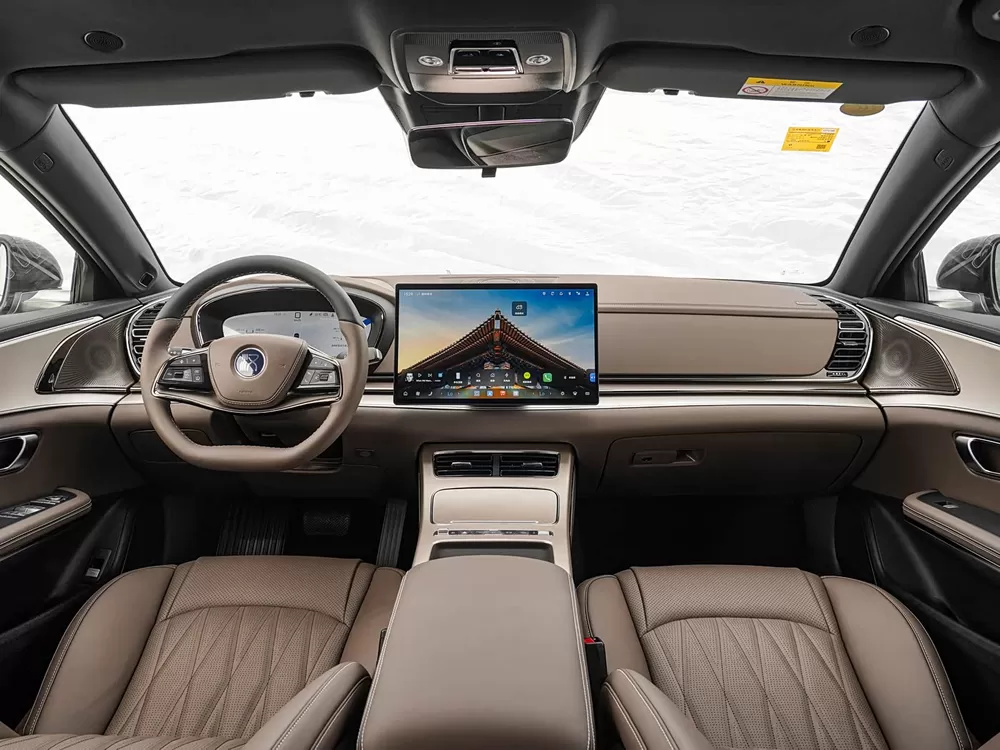
Perception System:
Standard Edition: 8 HD cameras + 12 ultrasonic sensors; supports pure vision-based perception.
High-Spec Optional Edition (Eye of God B): Adds 1 x 128-line LiDAR sensor; computing power reaches 254 TOPS.
Core Functions:
Highway NOA: Automatic lane changes, overtaking, ramp entry/exit, and automated parking within service areas.
Intelligent Parking: Supports memory for 5 parking spots; automatically identifies perpendicular and parallel parking spaces.
AEB + BSD + DOW + RCTA: Comprehensive active safety across all scenarios; pedestrian detection accuracy exceeds 90% at night.
System Architecture: Based on a reinforcement learning-driven, end-to-end large-scale model; not driven by rule-based libraries, possessing advanced scene understanding and decision-making capabilities.
Compliance & Certification: Complies with the GB/T 44416-2024 functional safety standard; features local data processing and meets privacy regulations in both China and the EU (GDPR).
Technical Positioning: "Eye of God 5.0" is BYD's first fully in-house developed, full-stack L2+ intelligent driving system. Its "vision + radar" dual-path approach delivers a cost-effective, OTA-upgradable intelligent driving solution for the global market.
|
Dimension |
Han EV Flash Charge Edition Compatibility Status |
|
Charging Standards |
Supports CCS1 (North America), CCS2 (Europe), GB/T (China), and CHAdeMO (Japan). |
|
Regulatory certification |
Compliant with ECE R155 (cybersecurity), UN R156 (automatic emergency braking), and ISO 21448 (SOTIF). |
|
Export potential |
It can enter the Southeast Asian, Middle Eastern, and Latin American markets without hardware modifications, and has already passed the access tests in Thailand and the UAE. |
|
Language support |
The in-vehicle infotainment system supports 12 languages, includingEnglish, Spanish, Arabic, and Russian , and its voice recognition supports multiple accents. |
|
Service Network |
BYD's global after-sales network covers more than 80 countries, and 200 new flash charging service stations will be added in 2026. |
Global Value: The Han EV Flash Charge Edition is the first mid-to-large-sized sedan to deeply integrate a "Chinese-style fast-charging experience" with "global compliance standards." Its technical approach offers emerging markets a paradigm for intelligent mobility that requires neither reliance on high-precision maps nor expensive hardware.
The 2026 Han EV Flash Charge Edition may lack the acceleration of a supercar or the million-dollar-tier interior luxury, yet—by delivering a 705 km range on a 69 kWh battery pack, fully recharging in just 9 minutes, and achieving an ultra-low energy consumption of 10.8 kWh/100 km—it has earned the distinction of being a truly "practical and user-friendly electric vehicle."